
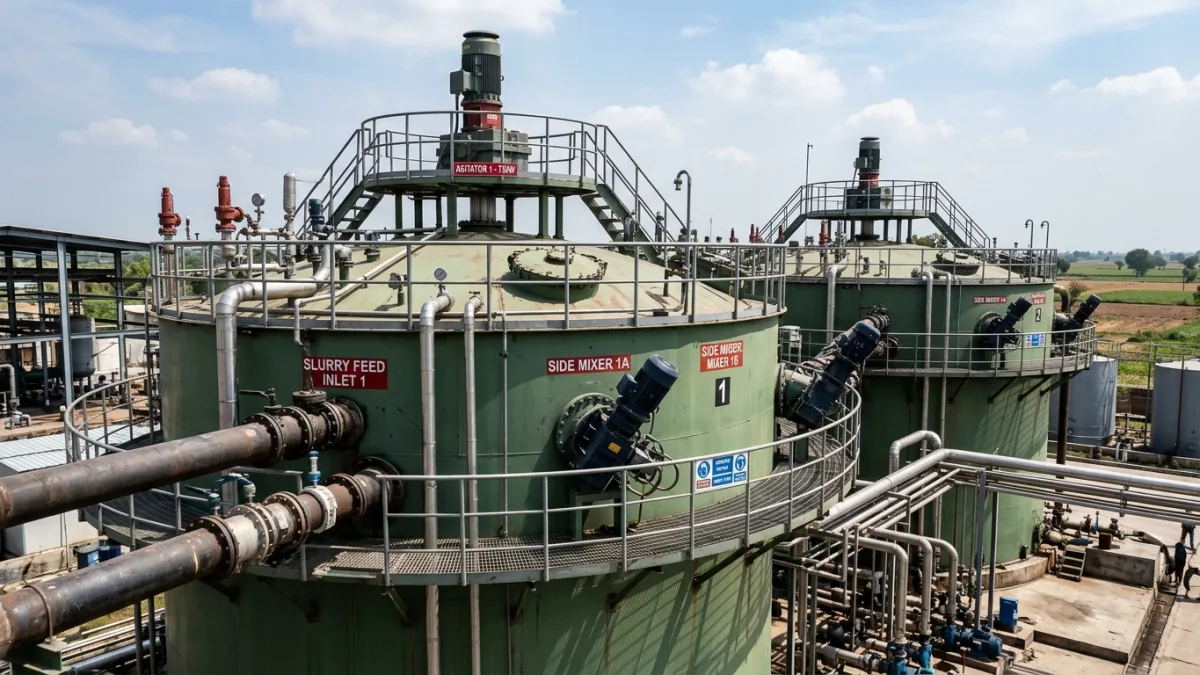
Anaerobic digestion (AD) is a biological degradation process where specialized microbial consortia decompose complex organic matter in oxygen-depleted environments, generating methane-rich biogas and nutrient-dense bio-fertilizer.
1. The Four Biological Phases of Anaerobic Digestion
Phase 1: Hydrolysis
Complex, insoluble organic polymers—including carbohydrates, cellulose, proteins, and lipids—are broken down by hydrolytic enzymes (cellulase, protease, amylase) excreted by facultative bacteria into soluble simple sugars, amino acids, and fatty acids.
Phase 2: Acidogenesis (Fermentation)
Acidogenic bacteria convert the dissolved hydrolysis products into volatile fatty acids (VFAs)—primarily acetic, propionic, and butyric acids—alongside alcohols, carbon dioxide, hydrogen gas, and ammonia.
Phase 3: Acetogenesis
Acetogenic microbes further metabolize higher volatile fatty acids and alcohols into acetic acid, hydrogen, and carbon dioxide, the mandatory precursors consumed by methanogenic archaea.
Phase 4: Methanogenesis
In the final and most sensitive phase, strict anaerobic methanogenic archaea synthesize methane (CH4) through two major biological pathways:
- Acetoclastic Methanogenesis: Cleaves acetic acid into methane and carbon dioxide (accounting for ~70% of total biogas yield).
- Hydrogenotrophic Methanogenesis: Reduces carbon dioxide using hydrogen gas as an electron donor (accounting for ~30% of biogas yield).
2. Key Operating Parameters for Stable Digester Health
| Parameter | Target Operating Range | Impact of Deviation |
|---|---|---|
| Operating Temperature | Mesophilic: 37°C – 40°C Thermophilic: 50°C – 55°C | Fluctuations > 1.5°C shock methanogenic cultures |
| Digester pH | 6.8 – 7.4 | pH < 6.5 inhibits methanogens; causes digester souring |
| Carbon-to-Nitrogen Ratio (C:N) | 25:1 to 30:1 | Low C:N (< 15:1) causes toxic free ammonia accumulation |
| Volatile Fatty Acid / Alkalinity Ratio (FOS/TAC) | 0.25 – 0.35 | Values > 0.40 indicate impending acidification |
| Hydraulic Retention Time (HRT) | 25 – 40 Days | Insufficient HRT results in incomplete solids conversion |
To evaluate anaerobic digestion systems for your site, review our Advanced CBG Technology or contact our biochemical engineering team.