
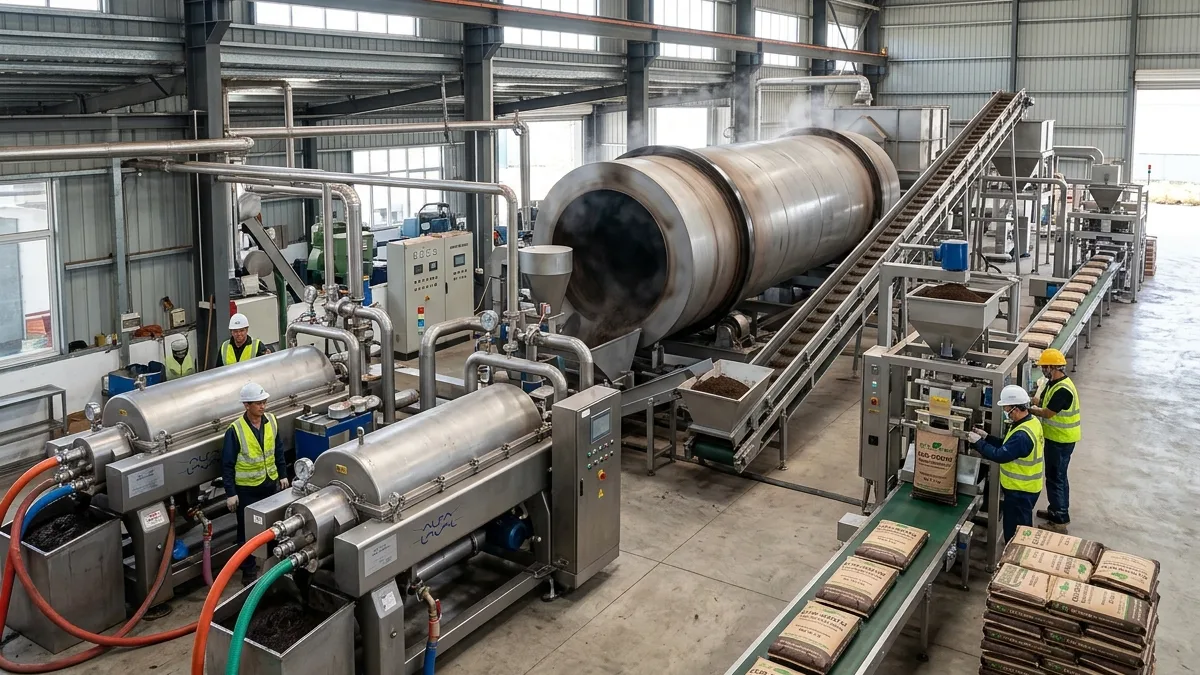
India possesses the world’s largest bovine population, generating hundreds of millions of metric tons of cattle dung (gobar) every single day. While traditional village-level gobar gas plants have existed for decades, modern industrial-scale Cow Dung to Compressed Biogas (CBG) refineries represent a quantum technological leap. By integrating high-rate digester agitation, automated sand separation, membrane gas upgrading, and 250-bar cascade dispensing, dairy-based CBG plants turn livestock waste into high-profit vehicular fuel and certified organic manure.
As the specialized bio-energy vertical under AMVATS ENGINEERING & TECHNOLOGIES, Amvats CBG develops utility-scale cattle manure biomethanation facilities engineered for long-term operational resilience and maximum biogas yield.
Biochemical Characteristics of Cattle Dung
Fresh cattle dung is an ideal biological baseline for anaerobic digestion due to its innate microbiological characteristics:
- Total Solids (TS): Typically 16% to 20% in fresh dung, diluted with water or recycled liquid digestate to 8%–10% TS for smooth pumping.
- Volatile Solids (VS): Accounts for 75% to 85% of total dry solids.
- Natural Inoculum: Ruminant animals harbor billions of active cellulolytic bacteria, acetogens, and methanogenic archaea, ensuring instantaneous digester seeding without needing artificial bacterial starters.
- Inherent Buffering Capacity: High natural alkalinity resists sudden drops in pH, making cattle manure digesters remarkably resistant to biological failure or souring.
Commercial Process Flow: From Goshala to Gas Station
Phase 1: Collection, Desanding & Slurry Preparation
Cattle dung is collected from organized dairy clusters, goshalas, or rural collection centers. Raw manure contains fine sand, gravel, and bovine bedding. The slurry passes through a specialized grit chamber with hydrocyclones to separate abrasive inorganic particles before entering the digester, preventing bottom silting.
Phase 2: Continuous Stirred-Tank Digestion (CSTR)
The conditioned slurry enters large-volume CSTR digesters operated under steady mesophilic conditions (37°C to 40°C). Hydraulic Retention Time (HRT) typically spans 25 to 35 days. Heavy-duty central or side-entry mechanical agitators ensure homogeneous substrate blending and prevent floating scum formation.
Phase 3: Desulfurization & Membrane Upgrading
Raw biogas released from cow dung contains 55%–62% methane, 38%–45% carbon dioxide, and 1,000–3,500 ppm of $H_2S$. After biological desulfurization reducing $H_2S$ to <200 ppm, dry chemical scrubbing and three-stage membrane separation strips $CO_2$, achieving >96% methane purity.
Phase 4: Compression and Virtual Pipeline Logistics
The purified CBG is compressed to 250 bar using high-pressure four-stage reciprocating gas compressors, loading directly into commercial tube trailers (cascades) for delivery to retail fuel stations or industrial natural gas customers.
| Plant Capacity (Raw Dung TPD) | Daily CBG Output (Kg) | Solid FOM Yield (TPD) | Liquid LFOM Yield (KLD) | Required Dairy Cattle Base |
|---|---|---|---|---|
| 25 TPD | 450 – 550 kg | 5 – 7 TPD | 15 – 18 KLD | 1,800 – 2,200 Cattle |
| 50 TPD | 950 – 1,150 kg | 12 – 15 TPD | 30 – 35 KLD | 3,800 – 4,500 Cattle |
| 100 TPD | 1,900 – 2,300 kg | 25 – 30 TPD | 65 – 75 KLD | 7,500 – 9,000 Cattle |
| 200 TPD | 4,000 – 4,800 kg | 50 – 60 TPD | 130 – 150 KLD | 15,000 – 18,000 Cattle |
The Dual-Revenue Backbone: Fermented Organic Manure (FOM)
While Bio-CNG sales deliver stable cash flow, the fermented digestate represents an equally valuable revenue stream. Because the anaerobic digestion process destroys pathogens and weed seeds while preserving all original nitrogen, phosphorus, and potassium (NPK), digestate yields superior bio-fertilizer:
- Solid Fermented Organic Manure (FOM): Enriched with organic carbon (>14%), FOM restores depleted agricultural soil microbiomes and is packaged in 50 kg bags for agricultural retail.
- Liquid FOM (LFOM): Applied via drip irrigation systems and fertigation, offering rapid nutrient absorption for horticulture and high-value crops.
- Government Subsidies: Under India’s Market Development Assistance (MDA) scheme, FOM sales receive dedicated financial incentives (Rs. 1,500/ton) promoting chemical fertilizer replacement.
Build a High-Yield Cattle Dung CBG Plant
Amvats CBG provides turnkey engineering from goshala feedstock collection architectures to CSTR digester construction and Bio-CNG dispensing networks.