
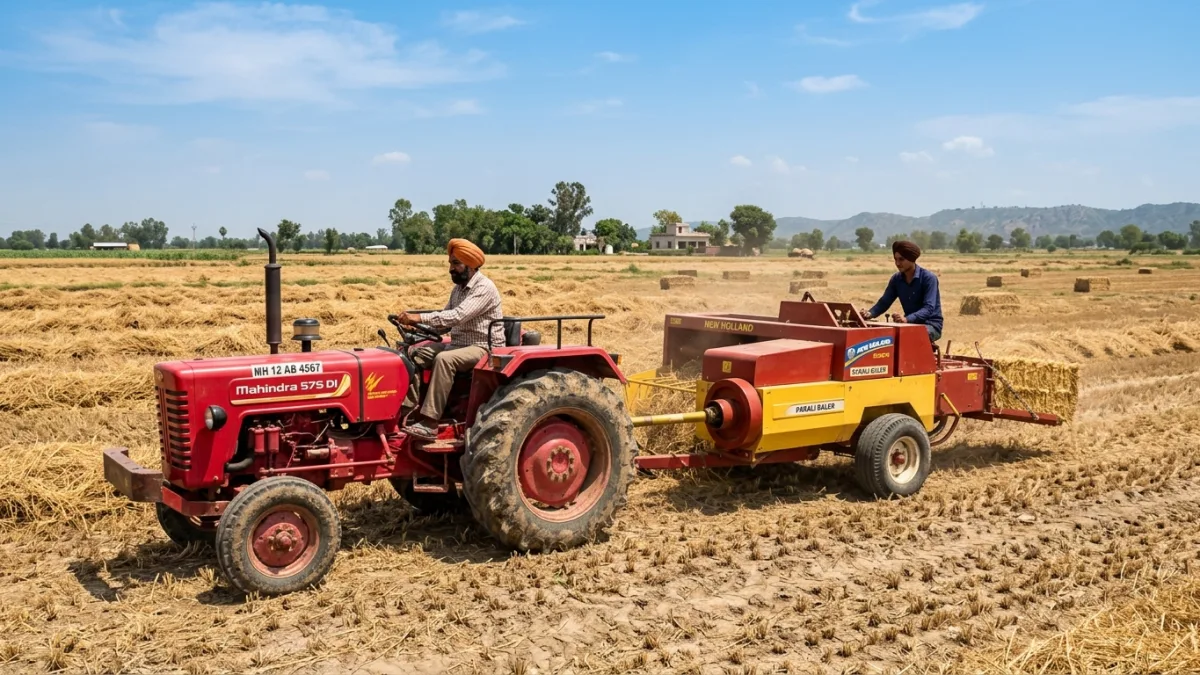
Seasonal crop residue burning—predominantly rice paddy straw (parali)—creates severe environmental and public health crises across northern India each autumn. Disposing of tens of millions of tons of crop residue through open burning wastes valuable biogenic energy and damages soil organic carbon. Converting paddy straw into Compressed Biogas (CBG) transforms an acute ecological challenge into a high-value domestic energy resource, providing farmers with supplemental income and driving India toward energy sovereignty.
Backed by the industrial project capabilities of AMVATS ENGINEERING & TECHNOLOGIES, Amvats CBG engineers advanced lignocellulosic pre-treatment and biomethanation systems optimized for high-yield straw-to-fuel conversion in Bihar and northern India.
The Fundamental Engineering Challenge: Lignin Recalcitrance
Unlike livestock manure or food waste, paddy straw is a dry, fibrous lignocellulosic biomass composed of:
- Cellulose (35% – 42%): Long glucose polymer chains that represent the primary substrate for microbial methane conversion.
- Hemicellulose (20% – 25%): Heterogeneous branched polysaccharides easily hydrolyzable under moderate conditions.
- Lignin (12% – 18%): An aromatic, non-biodegradable complex that cross-links cellulose and hemicellulose like concrete shielding steel rebar.
- Silica (8% – 14%): A mineral component that accelerates abrasive wear on mechanical impellers, pumps, and cutting blades.
Without specialized pre-treatment, anaerobic bacteria cannot penetrate the lignin shield. Untreated straw simply floats on the slurry surface, forming thick scum crusts that block biogas release and cause impeller failure.
Advanced Pre-Treatment Technologies for Paddy Straw
Commercial paddy straw CBG plants deploy specialized pre-treatment stages to break open the crystalline matrix:
1. Mechanical Size Reduction
Straw bales are de-wired, inspected, and processed through high-torque primary shredders followed by fine hammer mills. Reducing fiber length to 3mm–5mm dramatically increases microbial surface contact area and prevents pump cavitation.
2. Thermochemical & Steam Explosion Conditioning
High-pressure steam injection (typically 140°C–180°C at 4–8 bar) followed by instantaneous depressurization shatters the cellular wall. This "steam explosion" solubilizes hemicellulose, softens lignin bonds, and makes cellulose immediately accessible to cellulolytic enzymes.
3. Biological & Enzymatic Hydrolysis
Pre-conditioning with specialized cellulase enzyme cocktails or thermophilic hydrolytic bacterial consortia accelerates digestion kinetics, reducing necessary digester retention time from 55 days down to 28–35 days.
| Conversion Stage | Operating Parameters | Technical Objective | Critical Equipment |
|---|---|---|---|
| Bale Logistics & Storage | Moisture <15%, Stack aeration | Prevent spontaneous combustion, mold degradation | Telehandlers, covered biomass sheds |
| Milling & Dust Extraction | Particle cut <5mm, cyclone filtration | Rupture physical stalks, capture abrasive silica dust | Heavy-duty bale shredders, hammer mills |
| Hydrolysis / Pre-Conditioning | 65°C – 80°C, pH buffered 6.8–7.2 | Lignin disruption, volatile solids solubilization | Thermal hydrolysis reactors, twin-screw macerators |
| CSTR Anaerobic Digestion | 38°C mesophilic, 30–35 days HRT | Methanogenic conversion to biogas (55–60% CH₄) | Continuous stirred digesters with central agitators |
| Upgrading & Cascades | 3-stage polymeric membrane, 250 bar | >96% Methane purification for vehicle dispensing | Desulfurizers, membrane skids, compressors |
Paddy Straw Supply Chain and Economics
The success of a 10 TPD (Tons Per Day) paddy straw CBG plant depends heavily on agricultural procurement logistics:
- Harvest Window: The harvesting season lasts just 20 to 30 days, requiring intensive, mechanized baling across vast agricultural catchment areas.
- Biomass Requirement: A standard 10 TPD CBG plant requires approximately 100 to 120 TPD of dry straw, translating to 36,000–40,000 metric tons of baled biomass stored annually.
- Storage Footprint: Requires 12–15 acres of dedicated, well-ventilated storage yards equipped with firebreaks, automated thermal monitoring, and storm drainage.
- Farmer Revenue: Aggregating straw injects substantial capital into rural communities, paying farmers and custom hiring centers for residue collection instead of burning it.
Pioneering Crop Residue CBG Infrastructure
Amvats CBG engineers reliable paddy straw handling, thermal pre-treatment skids, and industrial digesters designed specifically for Indian agricultural substrates.