
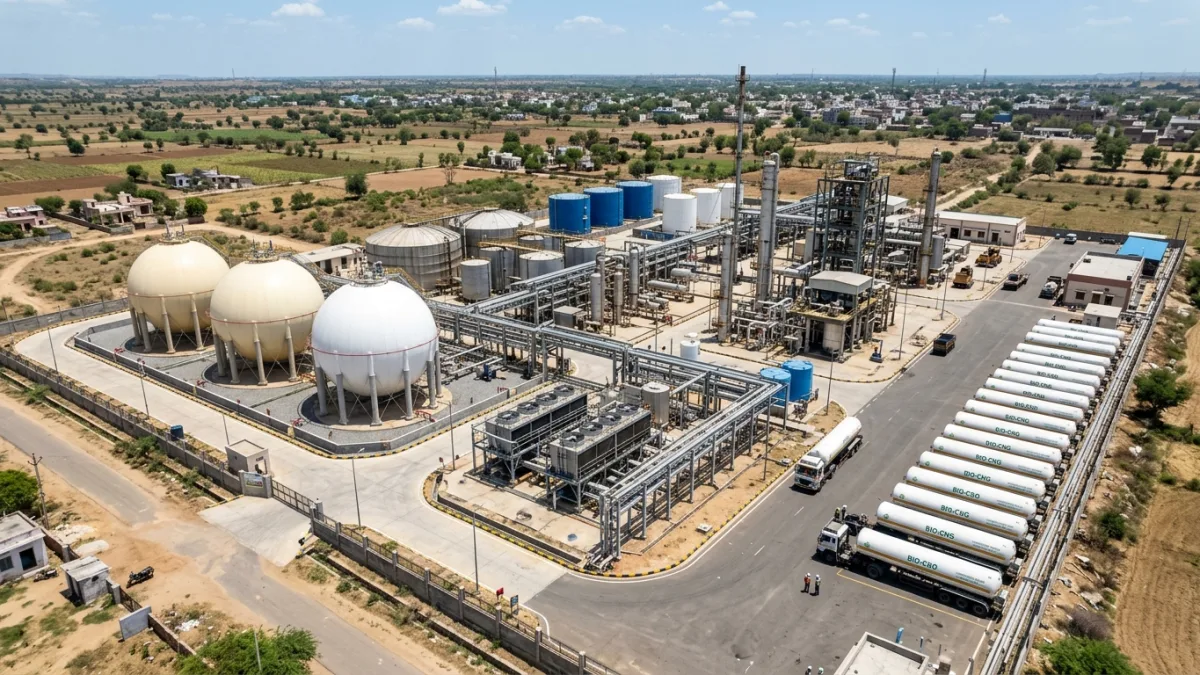
Bio-CNG is purified, high-calorific biomethane derived from biological waste streams, compressed to 200–250 bar pressure for commercial transport and industrial gas pipeline injection.
1. The Bio-CNG Production Chain
Transforming raw, wet organic feedstock into purified vehicular fuel involves four interconnected engineering phases:
Phase A: Feedstock Pre-treatment & Conditioning
Raw biomass—such as cattle dung, agro-residues, or mandi waste—is mechanically shredded, depackaged, and homogenized in equalization tanks. Water or recirculated digestate is added to establish an optimal Total Solids (TS) concentration between 8% and 12% for pumpable continuous digester feeding.
Phase B: Anaerobic Digestion (Biogas Generation)
In mesophilic (37°C–40°C) or thermophilic (50°C–55°C) CSTR digesters, anaerobic microorganisms break down volatile solids over a 25 to 35-day hydraulic retention time (HRT). The raw biogas generated typically contains 55%–65% methane, 35%–45% carbon dioxide, and 1,000–5,000 ppm of corrosive H2S.
Phase C: Gas Cleaning & Biomethane Upgrading
Raw biogas is unsuitable for engines without rigorous purification:
- Desulfurization: Biological trickle-bed filters or chemical iron sponge scrubbers reduce H2S below 20 ppm to prevent pipeline corrosion.
- Dehydration: Chilling systems and desiccant dryers drop gas dew points to sub-zero levels.
- Methane Enrichment: Three-stage polymeric membrane permeation or Pressure Swing Adsorption (PSA) separates CO2, elevating methane concentration above 92%–96%.
Phase D: Compression & Cascade Dispensing
The upgraded biomethane is fed to a multi-stage reciprocating gas compressor, raising pressure to 250 bar. The fuel is stored in stationary cylinder cascades or mobile light-commercial cascades for delivery to retail CNG dispensing stations.
2. Key Specifications of Commercial Bio-CNG
| Property | Specification (BIS IS 16087) | Typical Amvats Output |
|---|---|---|
| Methane (CH4) Content | ≥ 90.0% v/v | 93.5% – 96.0% |
| Carbon Dioxide (CO2) | ≤ 4.0% v/v | 2.0% – 3.5% |
| Hydrogen Sulfide (H2S) | ≤ 20.0 mg/m3 | ≤ 10.0 mg/m3 |
| Moisture Dew Point | ≤ -40°C at 200 bar | -45°C |
| Working Pressure | 200 – 250 bar | 250 bar |
For custom engineering and turnkey setup, consult our CBG & Bio-CNG Plant EPC Solutions or calculate plant potential with our Yield Calculator.